
Abkhasian
There were over a dozen long-living cultures thriving in the Caucasus Mountain ranges of Soviet Georgia. Collectively, we will refer broadly to this group of cultures as Georgians, even though our primary focus is directed to one of these cultures known as the Abkhasians.
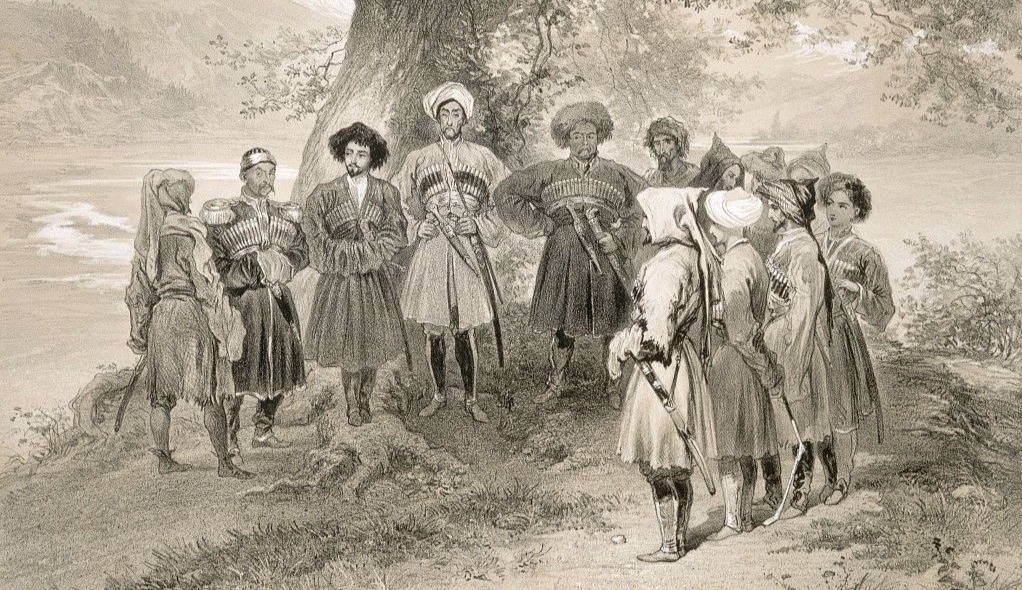
The Abkhasian culture is comprised of both Christians and Muslims. Prof. Pitskhelauri elite team of specialists’ spent four decades studying hundreds and hundreds of these longest-living peoples. Pitskhelauri wisely observed that aging is commanded by: (A) genetic resilience, (B) environmental determinants, as well as (C) lifestyle practices. His highly qualified team of specialists isolated many, but far from all, of the key environmental determinants that optimized both genetic expression and intracellular enzyme systems that govern life (proteomics). Both are responsible for bringing about thriving longevity in human beings.
MID specifically focuses on the genomics and proteomics of the long-living, and pertaining modern day references to effectuate our ministry of healing.
Digging deeper, Pitskhelauri’s team identified key aspects to these long-living peoples’ lifestyle that became clearly discernable to the highly trained eyes of his team.
Careful reading of his team’s findings identified seven persistent practices these long-living people performed 24/7, which was thought to be the foundation to their thriving longevity. Namely:
Cleansing, detoxification, purification and ‘earthing’ practices;
Daily exercise which included deeply breathing and at regular times joyful choir singing and dancing;
Longevity Replenishment rich in (a) colloidal regenerative factors (CRFSTM) and (b) rich amounts of a full-spectrum of minerals, consumed in amounts never in excess;
Adequate deep restful sleep;
Mental discipline, morality, devotion to God, joyfulness, thankfulness, playfulness and good humor;
Full spectrum sunlight exposure;
Pollution-free, pristine air, food and water.
Meticulous verification of these long-living peoples’ collective lifespans was established. I quote from his 1982 writing on pages 50-1.
“Recognizing the importance of establishing the accurate age of long-living persons, the Institute of Gerontology of the USSR Academy of Medical Sciences included rechecking and documentation of age in its program of medical examinations of selected persons 80 years and older. According to the method used, the year of birth is ascertained by a systematic comparison of all entries in the chart dealing with birth year and age. The information on birth certificates is taken under consideration, as well as the passport, village council accounting books, and other documents… These data (besides birth certificates) are compared with the questionnaire data and other questions on the chart where age and year are shown. When determining age, the subject or closest relatives are closely questioned. Information gained from such interviews are correlated with events of historical, local, and familial significance.”
Throughout the ~40 years of these meticulous studies, his team of gerontologists, anthropologists and physicians memorialized these long-living individuals by:
(i) making extensive photographic records, in addition to
(ii) meticulously taking and recording their personal and family histories, plus
(iii) charting thoroughly examinations on both their mental and physical characteristics.
Throughout history one can find numerous examples of persons having lived for extraordinarily long periods of time. Always it comes down to their optimal expression of their gene resilience, pristine environment and unique lifestyle.
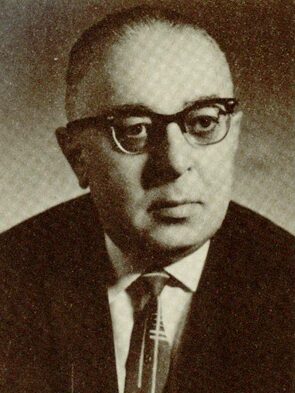
Skeptics allege (without sufficient or relevant proof) that collecting accurate verification of the extreme long-living (~120 years of age) cannot be reliably ascertained due to :
(1) inadequate written records and
(2) the phenomena of ‘age exaggeration’.
The latter is alleged to be committed by individuals seeking unearned prestige. One long-living culture inhabiting Peru’s high altitude mountainous La Convencion Province, is known as the Vilcabambans. However, this culture was plagued by a small sub-population living mainly offsite, were addicted to alcohol, drugs and sex. Individuals comprising this sub-population besmirched the true factual longevity lifestyle practiced by this otherwise long-living culture. Other PTA people would never tolerate this immoral behavior within any sub-population living onsite. But alas, critics often hyperventilate about this one Peruvian sub-population of intoxicated thugs, insinuating without proof that all long-living and especially extremely long-living cultures located anywhere else in the world are guilty of ‘age exaggeration” tales.
But in the cases of these two cultures discussed here on the MID Home page, plus more recently many other long-living peoples studied in the Blue-Zones, the evidence backing these skeptics is hollow, scant or absent and of limited merit. The only argument which may have a small impact on the calculated number of years of longevity, could be a slight difference between the Islamic calendar (which uses either 29 or 30-day monthly cycles) vs. the standard Gregorian calendar comprised predominantly of 30 to 31 day monthly cycles.
Russian Georgia lies between the Major and Minor Caucasus Mountain chains, along an area of 70,000 square kilometers. There are glaciers of the high ground melt each Spring forming glacial milk. We showed this glacial milk earlier by a photo of several Hunzakuts sitting at the edge of a rapidly flowing milky-white high-mountain river stream. These Spring melts of downhill rushing mountain spring waters are channeled by elaborate irrigation systems into the multi-tiered, terraced low lands. The majority of those long-living preferred dwelling in such elevated rural areas of Georgia, with about 15% gravitating to the low-land city areas. Specifically, app roximately 85% of the long-living prefer to live at altitudes from 1,500 feet to 4,500 feet above sea level. This places the pta-Hunzakuts about 3,000 feet higher in altitude than most of the Georgians. The point here is that the long-living had to adapt to
make the most efficient use out of available oxygen at these great heights. As far as we are concerned, this directs us to study the Biblical principles of Pneumatology and the Breath of Life in the context of the longevity lifestyles of the long-living. The clue here is that oxygen atoms are energy liberating sources of electrons, so vital to the Breath of Life. And UV light which is much more prevalent at higher altitudes is an amazing contributor through the human eyes and skin of extra electrons which flow directly into our cells’ energy producing systems. Thus, the long-living who dwell at higher altitudes may in part make up for the their lower atmospheric oxygen concentration by their daily extra exposure to UV light.
Several very important facts to bear in mind is that it was customary whenever an infrequent cold came on, that those individuals would fast, bath and drink in abundance their glacial milk. Also note this glacial milk serving as a primary fertilizer, was profusely routed to irrigate their cherished nut tree orchards, making those nuts into true longevity replenishment rich in minerals.
So It comes as no surprise that whenever an Abkhasian was asked about their longevity, they referred to their high intake and utilization of their beloved glacial run-off water.
Due to the rapid downward flow of the mineral rich glacial milk, whirlpools form everywhere, which brings about structured (low surface tension) high Zeta-potential (high surface energy) colloidal mineral water.
This lower surface tension of the water, in effect makes this water more ‘wet’ or more easily able to penetrate into cells after drinking, thereby more effectively delivering more energy-rich minerals to the cells, as well as then more efficiently pick up waste and exit the cell, bringing about enhanced detoxification of their tissues.
So, we highlight this aspect of the Caucasus long-living people to be a key determinant to their longevity.
Male
Sula Benet, PhD, a linguist and anthropologist from Columbia University, spent much time embedded with carefully selected true pta-Abkhasian people. She meticulously memorialized their strict and highly evolved social, ethical and moral practices, all of which would have never allowed or tolerated any member of their culture committing ‘age exaggeration’.
Let’s now take a good look at the photographic record compiled by both Benet and Pitskhelauri:
During the All-Union Population Census of the USSR in 1959, the following record cases of longevity were discovered:
Aytraliyev Ismail, 160 years old (Azerbaijan SSR, Georgian region, village of Atrallar);
Mertiyeva Sarguz Kerem, 156 years old (Azerbaijan SSR, Masalin region, village of Shikhlar);
Chernyshev Ivan, 151 years old (Kaskh SSR, Alma-Ata). The oldest man in Soviet Azerbaijan and in the USSR was considered to be the recently deceased peasant of the village of Barzavu, Shirali Mislimov. At the time when the Hulistan treaty was concluded with Persia in 1813, which made Azerbaijan part of Russia, he was 8 years old. At the age of 168, he was alert and even worked a little.
The number of his descendants has reached 220.
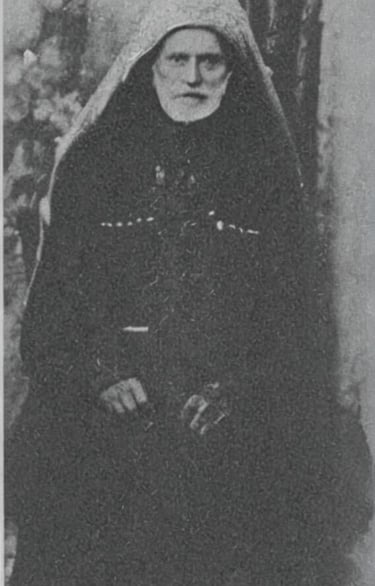
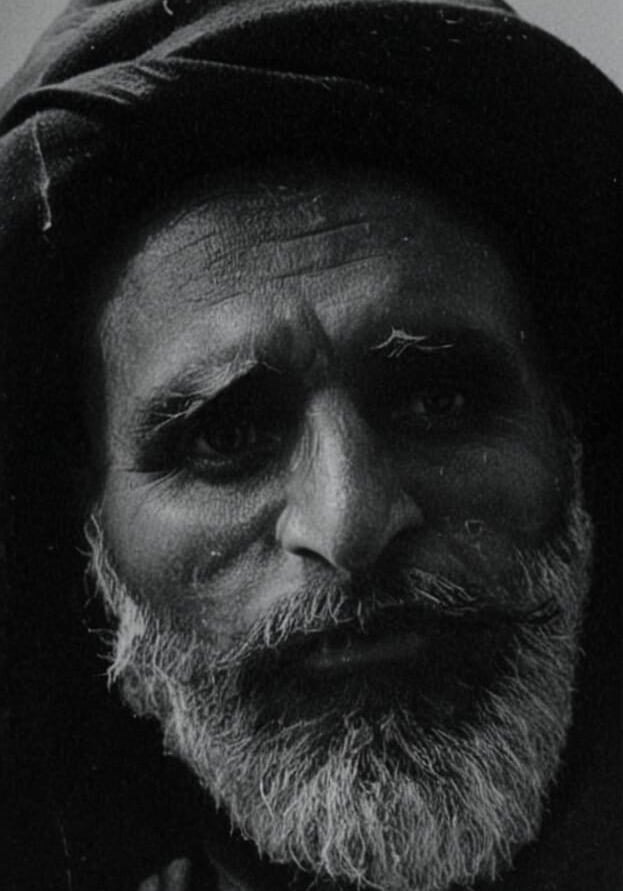
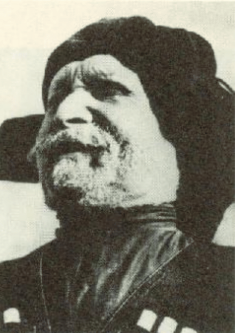
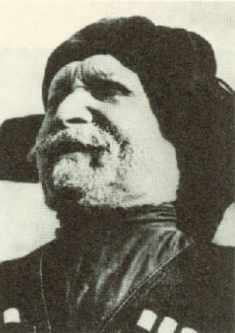
In the village of Pirassura of the Azerbaijan SSR, Makhmud Eyvazov, founder of the collective Komsomol farm, lived for 150 years. His health and mental alertness were remarkable.
At the present time in the settlement of Tikyaband in Azerbaijan, lives the oldest resident of that republic, collective farmer Medzhid Agayev, who is 139 years old. His family consists of 150 children, grandchildren, great-grandchildren, and great-great-grandchildren. When he reached the age of 136, the administration of the collective farm forbade him to walk with the flock and assigned him a quieter job: herding cows.
Much attention has been centered upon the long-living persons who were found in Georgia during the All-Union Population Census of 1970:
RV Gogolade, 132 years old (Lagodehk region, village of Shroma);
LG Pukhashivili, 130 years old (Karel’s region, village of Bani);
MD Mushkundiani, 129 years old (Tsager region, village of Chkhuteli);
LG Bigvava, 130 years old (Gal region, village of Ganatleba), and others.
A resident of the village Yermain (South Ossertian autonomous province); Ye. P. Koroyev, had survived to the age of 156. Until end of his life, he was distinguished by his mental alertness, his good memory, and his as a field hand.
The Abkhazian, Khapara Kiut (1785-1935), to be 155 years old.
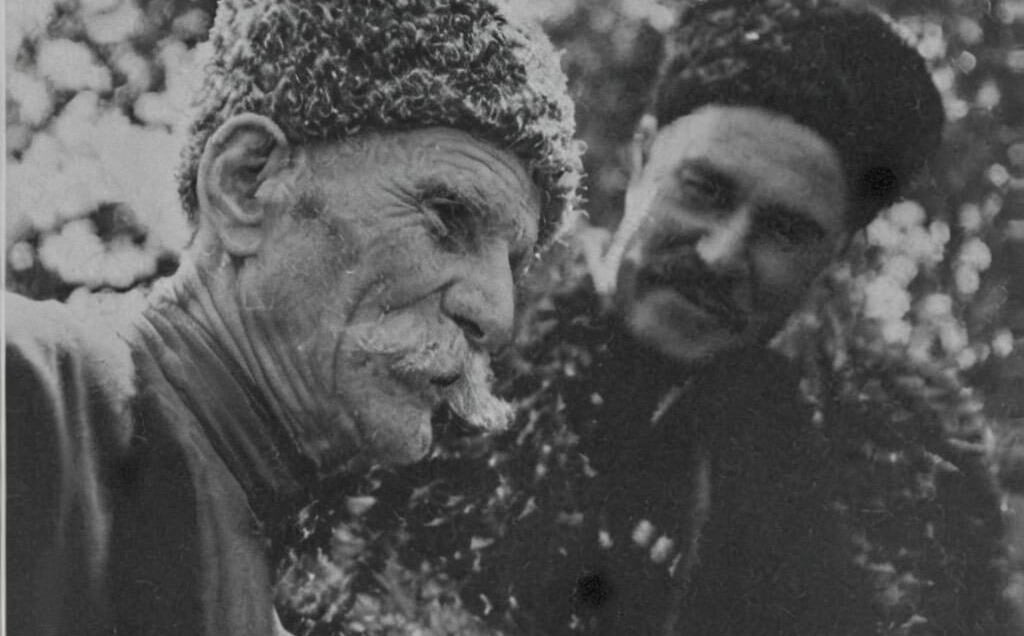
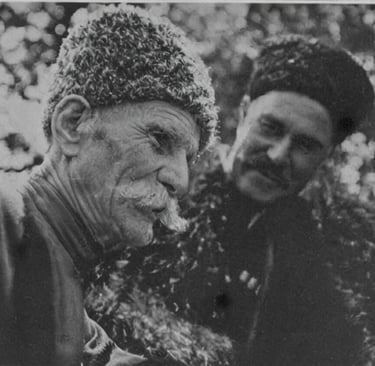
In the Ochamchir region, Zhats Kiut worked in the village of Kindgi until he reached the age of 144. He participated actively in developing the orchards of the collective farm. His brother Mamsyr Kiut died in 1946 at the age of 149.
Ashkanger Bzhaniya lived to the age of 148. A portrait of him as a person representing exceptional longevity was hung in the Dreden Museum.
In the village of Gentsvishi (Svanetiya) lives Daday Chopliani, age 129. He had been witness to the radical changes in the life of the Svans in the second half of the 19th century.
The recently deceased collective farmer of the village of Lykhny, A. Kh. Piliya, was 122. He was distinguished throughout his life by his tremendous working capacity.
In the village of Atara of Ochamchir region lives Selakh Butba, who is 121 years old. He is the father of a very large family. Many old men who have passed the century mark live in the Lentekh region. One resident of the village of Lausheri, Saba Babliani, has reached the age of 119, and is still mentally alert.
G Khvinchianshvili, a resident of the village of Meore-Sviri, is 116. He participated in the struggle of the Bulgarian people against the Ottoman yolk in 1878 and remembers the events of those days clearly.”
Female
In Georgia, in Dagestan, Ashura Telmekova lived till the age of 148. Khfaf Lasuri, a resident of Kvitouli village in Ochamnir in Abkhazia was still living at the time Pitskhelauri wrote his book. She was still alive at 138 years of age.
There are very important reasons why long-living women across the world lived longer than their male counterparts. One set of factors came in with civilization; that is, men tended to start smoking, drinking to excess, working at very stressful jobs that exposed them to occupational hazards and so were prone to more fatal accidents.
The second reason stems out of factors relating to how humans may regenerate themselves. There is a cross-over effect that benefit women when they are pregnant. In essence, it serves them as a kind of cellular therapy. In fact, in many primary cultures, it was routine for the woman to consume and ingest her placenta after giving child birth (which is used today for stem cell harvesting). By doing this, recovery was quickened, strength returned faster, and post-partum bleeding ceased within a few minutes.
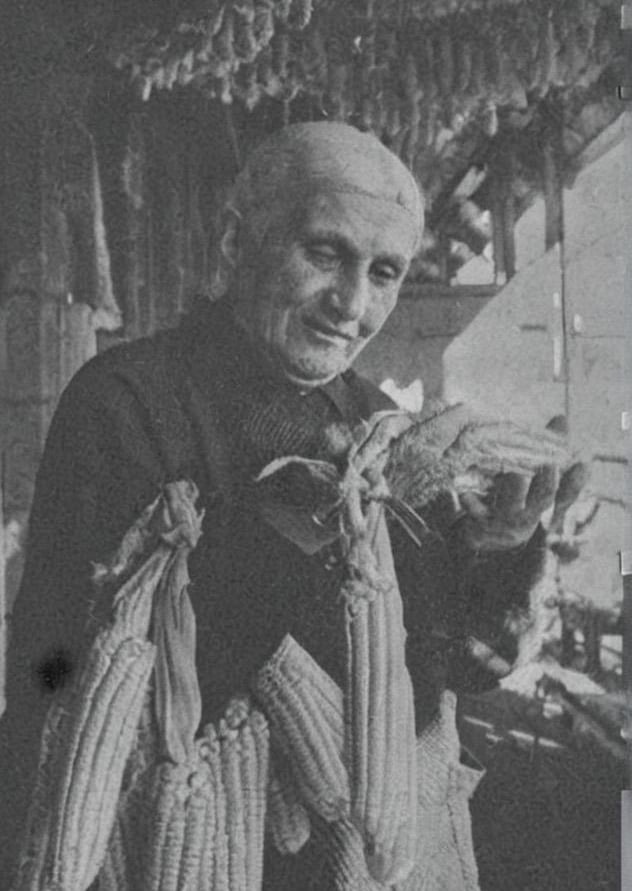
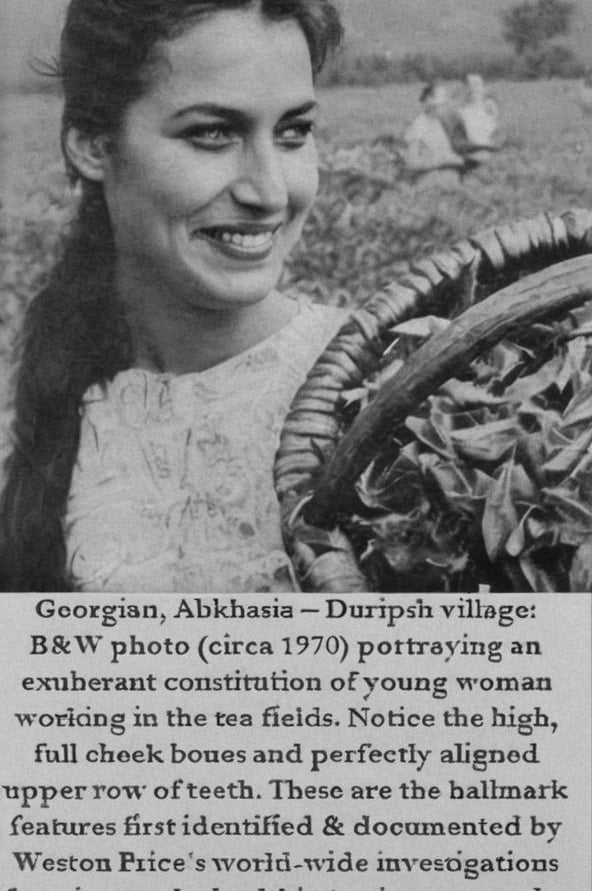
Two last closing comments for the women’s section: When women living among the long-living did not have children, their life expectancy was much less. Additionally, women who underwent abortions of any nature, also were rare among the long-living.
Prof. Pitskhelauri wrote extensively on “premature” aging. After all his many years studying long-living folks, he defined three categories of aging groups as I previously laid out above for the pta-Hunzakuts:
Mature – Those who were 60-74 years old;
Old – Those who were 75-89 years old; and
Long-living- And those who were plus 90 years old; and
The extreme long-living who lived +120 years or more.
He could thus state with authority that our bodies’ blue prints contain an aging process entirely different than what modern civilization has been experiencing. In fact, he shows clearly that “natural” or “normal physiological aging” actually starts at the age of 100 and above. But what happens in modern civilization is something entirely and unnaturally different. He calls this premature aging, a true pathology! He goes on to state correctly that premature or pathological aging in modern civilization begins between the ages of 60 and 70. The introduction to Pitskhelauri’s book states on pages 12-3 that:
“The concept of premature aging may be new to some industrialized nations, but this concept is closely linked to preventive medicine. This is a positive perspective because it denotes that, although aging is a natural process, it can be initiated before its time by improper health habits, insalubrious environments, and the lack of significant social roles. Viewing aging before one’s time from a scientific perspective as a result of external factors, is a new direction provided by Professor Pitskhelauri and Soviet gerontologists.
This concept could be a stimulus for the development of a variety of preventive measures against premature aging throughout the world…Professor Pitskhelauri presents a unique theory of aging. As a result of poor diet, poor environmental conditions, mental stress, or physical illness, the aging body becomes increasingly subject to disease. The organism may well have been able to withstand such stress in youth, but such original adaptability is gradually lost due to environmental factors that impinge on the internal order of the organism. Control of these external factors would lead to increased longevity, even without the scientific intervention. This theory does not discount the possibility that the aging of the organism’s new adaptive mechanisms may come into play that allow older persons to adapt anew to the multiple changes in the environment…”
Pitskhelauri quotes a germane poem by Arnold of Villanova (1235-1311) in his poem Regimen Sanitatis Salernitanum, that perhaps best describes the mental fortitude common to the long-lived:
If you wish health to return, And not to know disease, Drive away the weight of care, And consider anger to be unworthy, Eat modestly, eschewing wine, Do not consider valueless Wakefulness after dining, Scorning the afternoon nap, Do not retain your urine long,
Nor strain at the stool; If you will follow this – you will live long in the world. If there are too few physicians, let your physician be Three: Cheerful nature, tranquility, and moderate diet.
For review:
True, highly isolated primary peoples as documented by McCarrison, Price, Benet, and Pitskhelauri have now all faced the encroachment of civilization’s disease propagation. Almost as soon as pta-peoples were discovered, they became infiltrated by wave after wave of representatives fostering civilization’s programs that necessarily induce all manner of disease and accelerated aging.
Specifically, as is the case with the pta-Abkhasians, post 1980 brought on the encroachment of civilization with the expediency herald in by civil wars. Today only a small remnant of these long-living people carry on with their traditional ways, and with what remains of their once wide-ranging pristine environment.
However, still isolated or otherwise protected Blue Zones do still carry on, but time will tell if these Blue Zone will retain a semblance of the human races’ true potential to live out a thriving longevity common to their past.
Fortunately, by carefully identifying the practices of the past pta-peoples, we are now able to precisely delineate their longevity lifestyle practices, so that everyday members of civilization can make their fate like that of the historical pta-people of the world. In review we must know then apply these principles of adhering to a fully empowered Longevity Lifestyle:
Fasting and fasting coupled to:
spiritual mindfulness (heartfelt) meditation practices and praying that restructure our body’s entire water with the vibroacoustics of joyfulness and thankfulness. When humans practice this, they are necessarily being proper stewards of the environment they live in. The result is an optimizing of orderly water structure, both in the body and into the environment as Emoto has shown. The power of healing with the hands bears much more fruit than may otherwise occur.
consuming abundant unique spring waters featuring low surface tension for greater delivery in and out of living cells is a major driving force to thriving and longevity.
Specific fitness practices that raise energy and endurance. These involve assimilating and saturating our cells with oxygen, full spectrum light and earthing/grounding contact with the bear earth which drains the body of energy robbing positive ions.
Consuming fresh foods featuring regenerative nourishment grown in extremely rich mineral-laced pristine soils. Also, just as the Hunzakuts liberally used Himalayan Pink Salt, the Caucasus Mountains likewise provided abundant trace mineral salts. This highly nourishing source of essential minerals such as iodine, now called Svanetian Salt, is still widely used liberally by Georgians.
Special handling of such regenerative nourishing foods (Longevity Replenishment) requires time-honored methods of food gathering, preparation, food preservation.
Then eating slowly and deliberately to thoroughly chewing (Fletcherizing) each mouthful was the custom of many of the long-lived. This practice of thoroughly chewing each mouthful was enabled by their dental arches as noted by Price. These perfect dental arches of the long-living featured perfect teeth, free of cavities and were ideal for mastication, which greatly enhanced bioavailability of all nutrients and growth factors (cRFs) rich in these foods. Additionally, it was and still is customary for pta-people to only fill their single-plate of food to about 80%, instead of serving themselves a full plate of food at each meal. in order to never overeat;
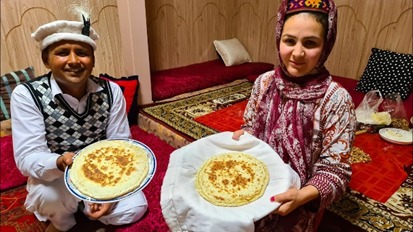


Delicious renowned Hunza dish Chap Soro Abkhasian dish of walnuts and spices.
We have no fate except what we make of our destiny. Practice a scripturally based longevity lifestyle and help lead humanity to an earth as it is in heaven.
Contact
NAVIGATION
725 Addison Road, Slinger, WI 53086
About
Our board & alliances
MID projects
Membership
Blog